

How To Get Paid To Trade Without Personal Funds
Getting paid to trade someone else’s simulated funds is one of the most straightforward paths into professional trading. But straightforward doesn’t mean easy. Most traders who attempt funded evaluations don’t pass, not because the rules are unfair, but because the process requires something many traders underestimate: patience and discipline under pressure.
The ability to follow a plan when the market tempts you to deviate is what separates funded traders from everyone still trying.
In this post, we’ll break down exactly what a funded trader program is, walk through every stage from evaluation to reward, and show you how to get started with a clear, structured path so you know precisely what’s ahead before you place your first trade.
TLDR:
Funded trader programs let you trade a firm’s money instead of your own. You pay a challenge fee, pass a two-phase evaluation that tests your discipline and risk management (not just your P&L), and receive a funded account where you keep 70-90% of the profits.
Most traders don’t pass because they fail to maintain consistent performance within the required risk limits. The process favors traders who follow defined rules, manage drawdown carefully, and maintain stable performance over time.
What Is A Funded Trader Program?
A funded trader program is a partnership where a proprietary trading firm provides simulated funds to a trader who trades the firm’s money and shares the profits. Traders don’t risk personal savings and can keep a large portion of the earnings, often 70% to 90%. The firm sets rules and risk limits to promote disciplined trading.
Participation starts with an evaluation process that tests strategy, consistency, and risk control. Successful candidates complete the challenge phases and receive access to a funded trading account.
Many programs refund the initial challenge fee after all evaluation stages are completed and a funded account is granted. Profit is then split between the trader and the firm according to the program’s terms.
How To Get Paid To Trade Without Personal Funds
Going from zero simulated funds to funded trader follows a specific process, and none of it is hidden. That clarity is the advantage. The hard part is in the execution.
The most reliable way to do all of this is through a prop firm’s funded program, where the structure does half the work for you if you’re willing to follow it.
Here’s how each stage works.
Choose a Funded Trading Program
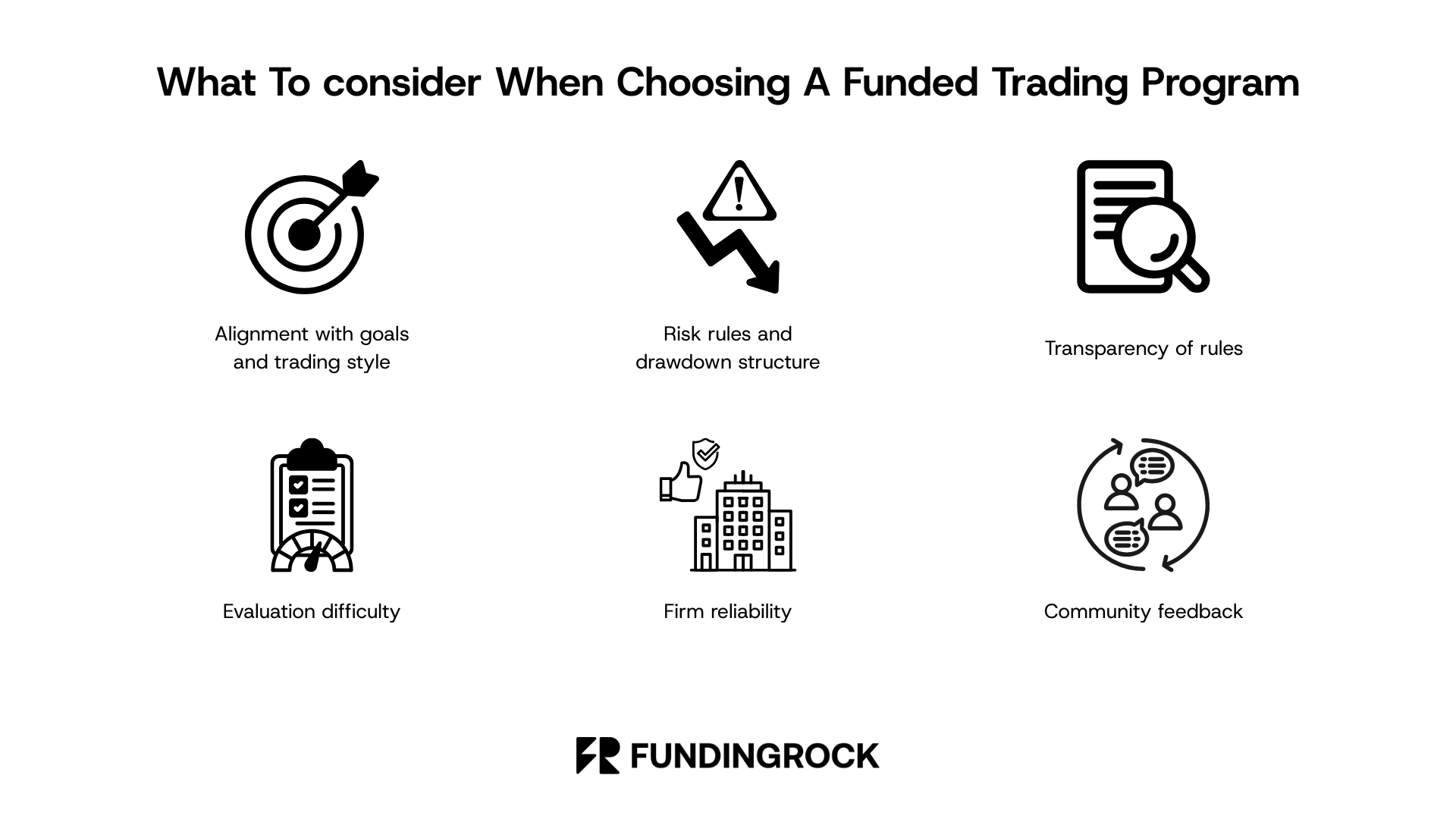
- Alignment with goals and trading style: Select a program that fits personal goals, strategies, and risk tolerance. Strong alignment improves consistency and decision making.
- Risk rules and drawdown structure: Review how daily drawdown, maximum loss limits, and trailing drawdowns work. Risk frameworks directly affect flexibility and trade management.
- Transparency of rules: Clear explanations of breaches, refunds, rewards, and evaluation requirements help avoid confusion and unexpected setbacks.
- Evaluation difficulty: Fair programs maintain realistic targets and flexible conditions. Excessively strict requirements often make passing unnecessarily difficult.
- Firm reliability: Established firms with strong track records and consistent rewards offer greater reliability.
- Community feedback: Check reviews on sites like Trustpilot or Reddit to see what users have to say about the trading program. These sites can reveal recurring issues such as reward delays or sudden rule changes.
Pass the Evaluation Phase
Most prop firms use a two phase evaluation to move a trader from the challenge to the first reward. A third phase exists at some firms but it’s still uncommon.
Phase 1: The challenge
The first stage measures how well a trader can follow a clear plan. Focus stays on high-quality setups and controlled risk per trade, and a personal daily loss limit helps prevent unnecessary damage to the account.
Progress should look stable instead of explosive. The profit target is reached within the required trading days, drawdown stays well below the violation threshold, and position sizes remain consistent throughout.
Trouble usually starts when traders try to force results. Larger positions, revenge trades, or ignoring floating losses often lead to rule violations. Unrealized losses count toward daily limits on many platforms, so traders should assume both realized and unrealized PnL affect the rules unless confirmed otherwise.
Phase 2: Verification
The second step repeats the same structure with a smaller profit target in most programs. Rules remain nearly identical, and that’s the point. Firms want proof that the first evaluation wasn’t a lucky run, so consistency in position size, setups, and risk management carries just as much weight as the results themselves.
Two clean evaluation periods together signal stable decision making and genuine risk control.
Activation: Funded account
Funding activates the real agreement between trader and firm. Reward shares often range from 80% to 90% for the trader and may increase after consistent rewards, though most firms include a waiting period of 7 to 30 days before the first withdrawal and may require a minimum number of active trading days between rewards.
How long that agreement lasts depends largely on drawdown management. A static drawdown stays fixed at a defined level, while a trailing drawdown rises with new equity highs, which can tighten available risk during open profit. Understanding the difference matters because it determines how much room a trader has to operate on any given day.
For that reason, the trader’s role is really that of a risk manager first. Keeping the account stable is what allows an edge to compound over time.
Reward
The reward process usually follows a set routine. Traders track the first eligible withdrawal date, confirm that all activity requirements are completed, and export account statements that include trade dates, symbols, tickets, and total PnL. Keeping personal records helps verify results if any questions arise during review.
Firms often look past raw profit figures at this stage. Accounts that rely on a single oversized winning day may face rejection, so consistent performance across the reward period carries real weight.
Some traders also choose to pause trading after submitting a request. Certain drawdown models can behave unpredictably if open trades fluctuate during processing, and removing that variable reduces the risk of an unintended violation.
Rare third phase evaluation
A small number of firms add another evaluation step before funding. The review centers on performance data, with close attention to risk management, execution quality, and how well the trader adjusted based on earlier results. The firm is looking for evidence that the same level of control can hold across a longer sample of trades.
Transition to a Funded Account
A funded account is a trading account that traders receive after passing an evaluation. It allows them to operate with the firm’s simulated funds instead of risking large amounts of personal money. Profits are shared between the trader and the firm, often allowing traders to keep 70% to 90%.
Account sizes often range from about $5,000 to more than $20M depending on the firm and the challenge selected. Traders must respect clear risk limits such as maximum drawdown and daily loss rules in order to keep the account active.
For example, FundingRock operates a two-step challenge that evaluates trading performance. Traders choose an account size, complete the phases, and follow the firm’s rules. Then, successful participants receive a FundingRock Account that reflects the balance selected during the challenge purchase.
Funded traders receive an 80% reward share, while the firm keeps 20%. Rewards are available every 14 days and traders can manage withdrawals directly from their dashboard after completing identity verification and meeting FundingRock Account requirements.
FundingRock also returns the initial challenge fee to traders who successfully pass all phases and obtain a FundingRock Account. The refund is processed together with the first withdrawal once profits reach at least $100. Any violation of daily or overall drawdown limits leads to immediate account deactivation. Traders still have the option to start a new challenge and try again.
How To Get Started With Fundingrock
Getting started with FundingRock is a very simple process:
1. Sign up
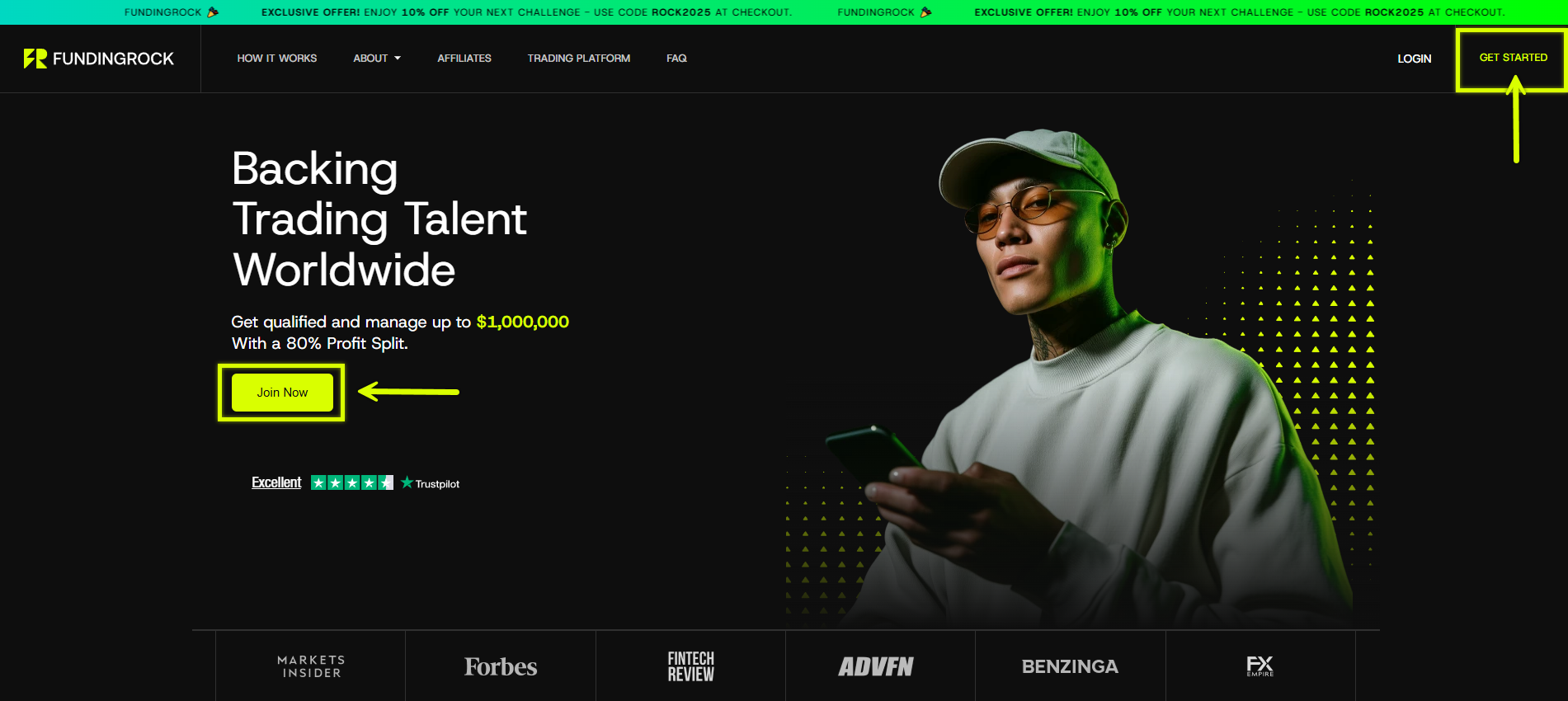
Create a FundingRock account through the “Join Now” or “Get started” button on the homepage. Enter basic details and set a username and password to complete the registration.
2. Pick your challenge
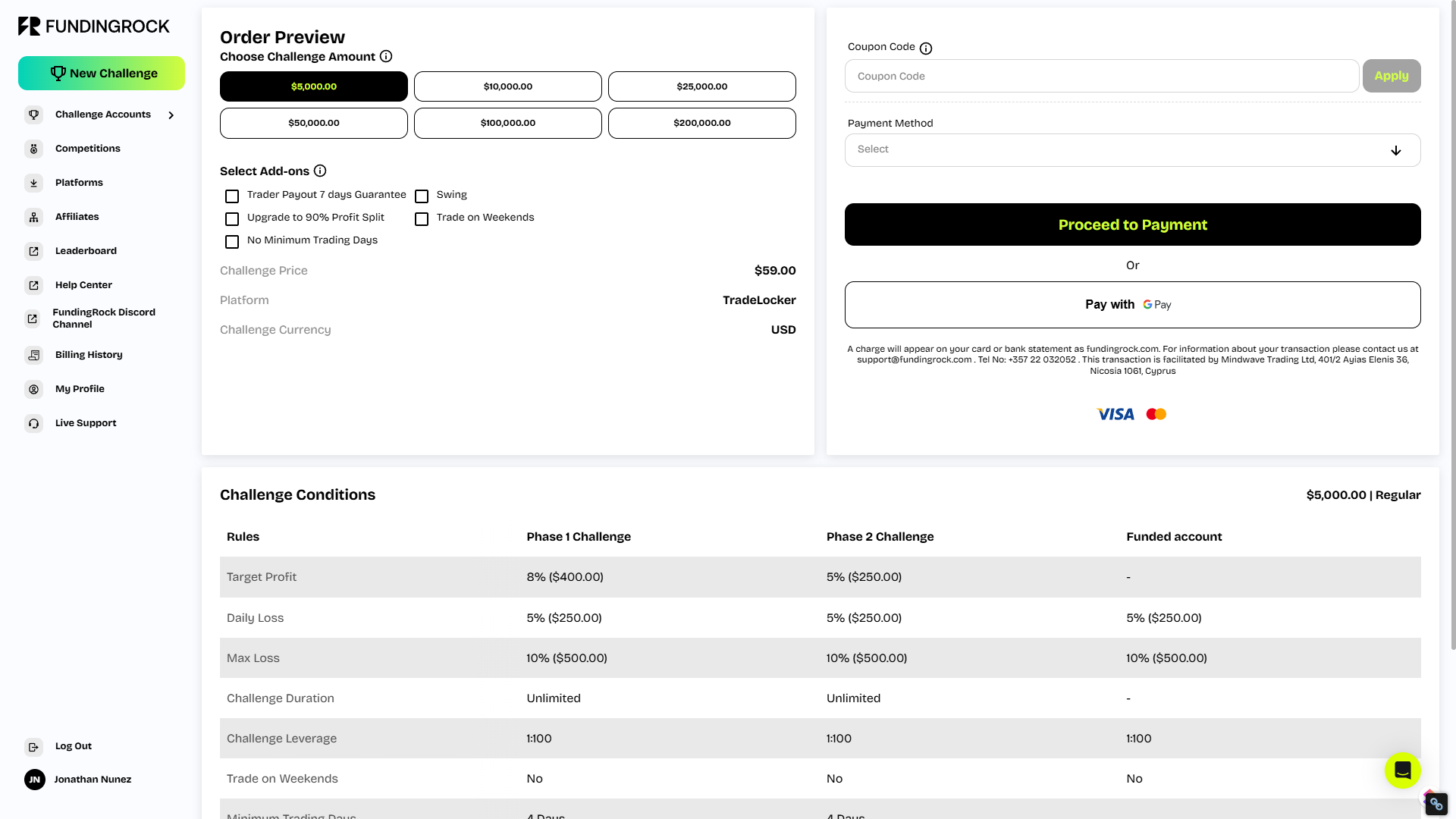
Access the dashboard and select a challenge that matches your trading approach. Options range from $5,000 to $100,000 and include specific profit targets and risk limits. Each challenge requires reaching the required % target under the rules.
3. Trade and prove your skills
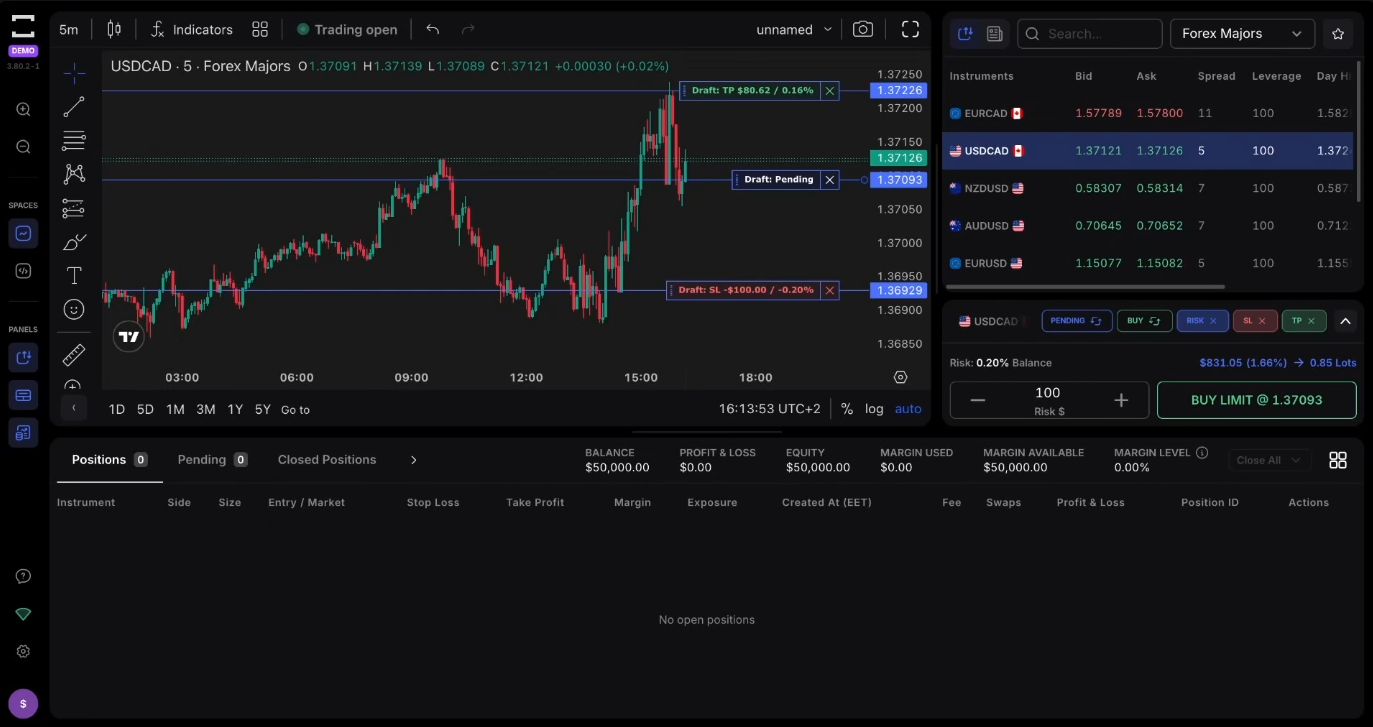
Start trading on the challenge account. Follow the risk parameters and work toward the profit goal set for that program.
4. Get funded
Successful completion of both evaluation phases leads to a FundingRock Account.
5. Withdraw your profits
Profit withdrawals are available every 14 days. Submit a reward request and the team processes it.
And that’s it! A clear path stands in front of you and every step moves you closer to trading larger simulated funds.
Are you ready to take the next step?
Choose the FundingRock plan that fits your goals and start your challenge today.
Conclusion
Trading without personal funds is a structured agreement between you and a firm that believes disciplined traders deserve simulated funds. The process starts with choosing a program that matches your style, continues through an evaluation designed to test consistency over luck, and leads to a funded account where real reward shares begin.
That said, the firms that offer these programs aren’t giving money away. They’re investing in traders who prove they can protect simulated funds first and grow them second. That means your job isn’t to be spectacular. It’s to be steady. Pass the evaluation phases, respect the drawdown rules, and treat every trading day like a risk management exercise. The rewards follow naturally from that discipline.